Blogs


Insights
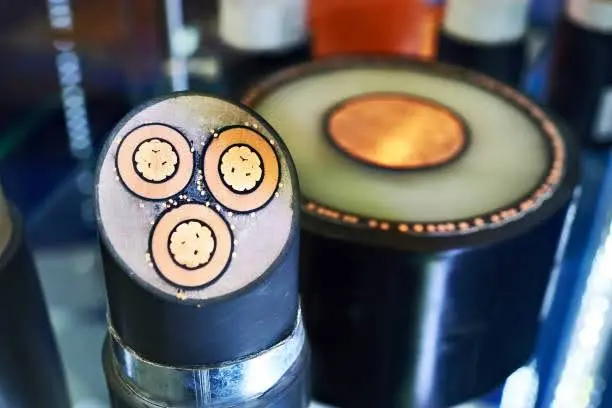
Cross-linked polyethylene (XLPE) has emerged as a key material in modern electrical cable manufacturing due to its outstanding combination of thermal, mechanical, and chemical properties. XLPE cables are widely used in power transmission and distribution networks, industrial installations, underground and submarine systems, and specialized high-voltage applications.
The superior performance of XLPE cables is primarily due to the crosslinking process, which converts linear polyethylene into a three-dimensional network, improving its heat resistance, mechanical strength, and chemical stability. Achieving consistent and high-quality XLPE, however, requires precise control over polymer formulation, additives, and catalysts.
Among these, DBTDL (Dibutyl Tin Dilaurate) plays a critical role in ensuring efficient crosslinking, uniform network formation, and optimal cable performance. DBTDL is a highly effective organotin catalyst widely employed in XLPE cable compounds.
It accelerates the peroxide-initiated crosslinking process, ensuring uniform reaction rates and reducing the energy and time required for curing. Without DBTDL, crosslinking would be slower, less uniform, and less efficient, potentially resulting in inferior mechanical, thermal, and electrical properties.
In this article, we explore the role of DBTDL in XLPE cable compounds, how it functions at the molecular level, its applications and advantages, key processing considerations, safety aspects, and emerging trends in its use!
XLPE cable compounds are primarily polyethylene formulations that have undergone chemical crosslinking to enhance their thermal, mechanical, and electrical performance. Crosslinking involves converting linear polyethylene chains into a three-dimensional network, which significantly improves material stability. The process leads to:
Enhanced thermal resistance, allowing cables to operate safely at higher temperatures. Improved mechanical strength, including better tensile and impact resistance. Reduced creep and deformation, ensuring long-term dimensional stability under load.
Superior chemical and moisture resistance, protecting cables from environmental degradation. The crosslinking of XLPE generally uses organic peroxide systems. Peroxides decompose upon heating to generate free radicals, which then attack the polyethylene chains, forming covalent bonds between polymer molecules.
The extent and uniformity of crosslinking determine the final properties of the cable, such as insulation strength, thermal performance, and lifespan. While crosslinking can occur without catalysts, the reaction is slow and difficult to control at industrial scales. Catalysts like DBTDL are therefore essential for efficient, controlled, and cost-effective XLPE production.
Dibutyl Tin Dilaurate (DBTDL) is an organotin compound widely used as a catalyst in polyurethane, silicone, and polyethylene crosslinking systems. Its molecular structure enables it to accelerate peroxide decomposition and promote efficient crosslinking in XLPE cable compounds. DBTDL is highly valued in industrial formulations due to several characteristics:
High catalytic activity, which allows it to work effectively even at low concentrations.
Thermal stability, ensuring consistent performance during high-temperature curing.
Selective catalysis, reducing side reactions and minimizing polymer degradation.
In XLPE cable manufacturing, DBTDL ensures that crosslinking occurs efficiently, uniformly, and with minimal energy input. It is compatible with a wide range of polyethylene grades and formulations, making it a versatile choice for cable manufacturers.
Click Here To Know More About Tin Calatyst!
The most important contribution of DBTDL to XLPE cable compounds is its catalytic activity, which enhances the speed and quality of the cross-linking process. In peroxide-based XLPE systems, peroxides break down under heat to generate free radicals that link the polyethylene chains. DBTDL accelerates this reaction, ensuring faster and more uniform cross-linking throughout the material.
In all these applications, DBTDL ensures that the crosslinking reaction is efficient, uniform, and consistent, directly impacting cable performance and longevity.
These advantages make DBTDL indispensable in producing XLPE cables that meet strict industrial standards for thermal, mechanical, and electrical performance.
Maintaining these parameters ensures consistent crosslinking, optimal cable performance, and long-term reliability.
DBTDL is highly effective, but safety and regulatory compliance are crucial. Handling must be done carefully to avoid skin contact, inhalation, or ingestion. Containers should be sealed and stored in dry conditions.
Disposal of DBTDL-containing waste must comply with local environmental regulations. Globally, regulations such as REACH mandate monitoring of organotin compounds to ensure worker safety and minimize environmental impact.
Compliance with these regulations, combined with good manufacturing practices, ensures both safety and product quality in XLPE cable production.
Need help selecting the right stabiliser? Get In Touch With Our Experts!
The use of DBTDL in XLPE cable compounds continues to evolve as the industry seeks more efficient, sustainable, and high-performance solutions. Manufacturers are increasingly focused on improving the efficiency of DBTDL to allow lower concentrations while maintaining fast, uniform crosslinking.
This not only reduces material costs but also improves environmental and safety compliance. Hybrid catalytic systems, which combine DBTDL with other organometallic or organic catalysts, are being explored to achieve more precise control over polymer network formation and crosslink density.
Reducing residual DBTDL in finished XLPE products is another important trend, aimed at improving safety, minimizing organotin content, and meeting stricter environmental regulations.
Additionally, the development of advanced XLPE compounds such as flame-retardant, high-temperature, and semi-conductive formulations relies heavily on optimized DBTDL use to ensure consistent thermal, mechanical, and electrical properties.
Despite the emergence of alternative catalyst technologies, DBTDL remains a highly reliable and widely used catalyst in large-scale XLPE cable production, due to its efficiency, selectivity, and proven track record in industrial applications.
DBTDL plays a pivotal role in XLPE cable compounds by accelerating peroxide-initiated crosslinking and ensuring uniform polymer network formation. Its use results in faster processing, lower energy consumption, better thermal stability, and improved electrical performance.
Proper handling, formulation control, and optimized processing parameters allow manufacturers to produce XLPE cables suitable for medium and high-voltage applications, industrial power systems, and specialized environments.
Although it works behind the scenes, DBTDL is essential to the reliability, safety, and efficiency of modern XLPE cables, making it one of the most important catalysts in the cable industry.
DBTDL (Dibutyl Tin Dilaurate) is an organotin catalyst used to accelerate the crosslinking process in XLPE (cross-linked polyethylene) cable compounds. It helps break down peroxides more efficiently during curing, allowing polyethylene chains to form strong, uniform crosslinks. This leads to faster production, improved material consistency, and enhanced mechanical, thermal, and electrical performance in the final cable insulation.
DBTDL improves XLPE cable performance by ensuring that the polymer network forms evenly and thoroughly. This results in higher gel content, which directly enhances the cable’s mechanical strength and durability. It also improves thermal resistance, enabling the cable to operate safely at elevated temperatures. Additionally, by creating a uniform insulation layer with fewer defects, DBTDL helps improve the electrical reliability and long-term stability of the cable.
Yes, using DBTDL requires careful attention to both processing and safety guidelines. The catalyst must be added in controlled concentrations, typically between 0.1% and 0.5%, to ensure effective crosslinking without degrading the polymer. Proper curing temperature and time are also essential to achieve optimal results. From a safety perspective, DBTDL should be handled with protective equipment, stored in sealed containers, and kept away from moisture. Following these precautions helps maintain product quality while ensuring safe handling during the manufacturing process.