Blogs


Insights
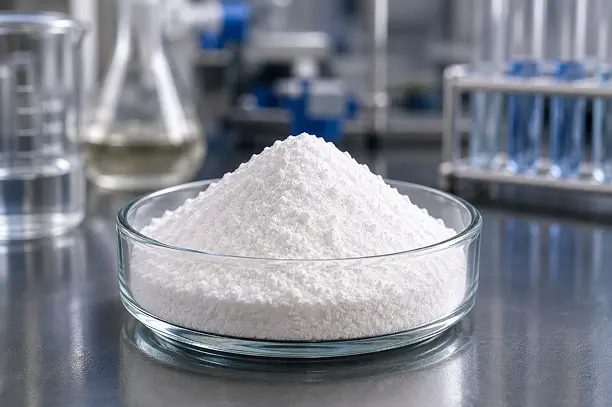
Picture trying to combine an acid and an alcohol to form an ester — the type of compound responsible for the pleasant smell of fruits, the flexibility of certain plastics, or the lubricating quality of synthetic oils.
On their own, these two ingredients often react far too slowly to be useful in industrial settings. Left alone, the reaction might take days, and even then, it may never fully complete.
This is where MBTO, or Monobutyltin Oxide, comes into the picture. MBTO is an organotin compound widely used as a catalyst to speed up two closely related chemical processes: Esterification (forming an ester from an acid and an alcohol) and Transesterification (converting one ester into another by swapping its alcohol component).
Much like a skilled coordinator who brings two hesitant partners together, MBTO helps these reactions happen faster, more completely, and with better control.
MBTO is a trusted name in industries ranging from plastics and coatings to lubricants and biodiesel production. This article explains, in a simple and structured way, what MBTO is, how it works, and why it remains a preferred catalyst choice across several important manufacturing processes.
To understand how Monobutyltin Oxide powers alkyd and polyester resin production as an esterification catalyst, explore our detailed guide on Monobutyltin Oxide (MBTO) : The Esterification Catalyst
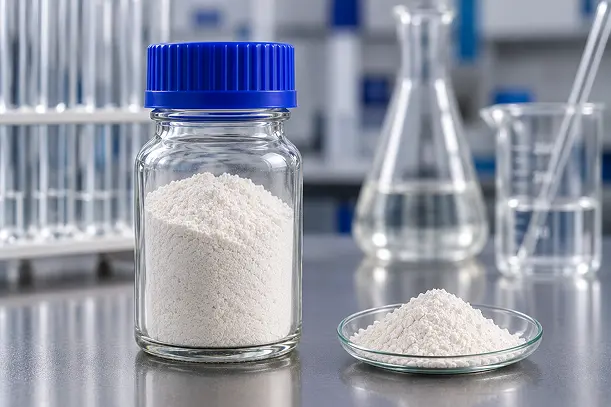
MBTO belongs to the organotin family of compounds, meaning it contains a tin atom bonded to organic (carbon-based) groups. In MBTO’s case, a single butyl group is attached to the tin atom, along with oxygen, forming a structure that is highly effective at promoting ester-related reactions.
Because MBTO is catalytic rather than reactive in the traditional sense, only small quantities are typically needed relative to the overall batch size, making it both efficient and cost-effective.
Before diving deeper into MBTO’s role, it helps to understand the two reactions it supports.
Both reactions are considered equilibrium reactions, meaning they can proceed forward or backward depending on conditions. Without help, these reactions:
A catalyst like MBTO addresses these challenges directly by lowering the energy required for the reaction to proceed, allowing manufacturers to achieve high conversion rates under more moderate, controllable conditions.
MBTO functions by coordinating with the oxygen atoms in the carboxylic acid or ester group, making the carbon atom in that group more attractive to the incoming alcohol molecule. This activation step is the key to speeding up the reaction.
Unlike some tin-based catalysts that contain two or more organic groups attached to the tin atom, MBTO’s simpler “mono” structure is often valued for offering strong catalytic activity while maintaining good compatibility with a wide range of acid and alcohol feedstocks.
MBTO’s catalytic abilities make it valuable across a surprisingly wide range of industries. Some of its most common applications include:
In each of these applications, MBTO’s role remains consistent: helping the acid-alcohol or ester-alcohol exchange occur efficiently, without becoming part of the final chemical structure itself.
Despite the availability of other esterification catalysts, MBTO continues to hold a strong position in the market for several reasons:
These qualities make MBTO a dependable choice for manufacturers seeking predictable, scalable, and economically viable esterification and transesterification processes.
While MBTO offers strong performance, there are a few practical considerations worth noting:
a) Dosage Control: Using too much catalyst can increase costs unnecessarily and may affect the color or clarity of sensitive products, while too little can leave the reaction incomplete
b) Moisture & Handling: As with many organotin compounds, proper storage away from excess moisture helps preserve MBTO’s effectiveness over time
c) Regulatory Considerations: Organotin compounds may be subject to regional handling, labeling, or usage regulations, so it is important to consult current safety data sheets and local guidelines before use
d) Process Optimization: Reaction temperature, time, and the ratio of reactants should be tailored alongside catalyst dosage to achieve the best possible yield and product quality
As industries continue to explore greener and more sustainable chemistry, some manufacturers are also evaluating alternative catalysts, such as titanium-based or enzymatic options, particularly for food-related or highly regulated applications.
However, MBTO remains a benchmark against which many of these alternatives are measured, owing to its reliable and well-documented performance.
Manufacturers have several catalyst options to choose from when designing an esterification or transesterification process, and understanding how MBTO compares helps explain why it is so often selected:
This comparison highlights that MBTO occupies a practical middle ground, offering strong performance, reasonable cost, and broad process compatibility, which is why it remains a go-to option across many ester-producing industries.
Getting the best results from MBTO isn’t just about adding the catalyst, several process variables directly affect how efficiently it performs:
1) Reaction Temperature — MBTO generally performs best within a moderate-to-high temperature range; too low a temperature slows activation, while excessive heat can encourage side reactions.
2) Catalyst Concentration — dosage must be carefully calibrated, as under-dosing leads to incomplete conversion while over-dosing adds unnecessary cost and may affect product clarity.
3) Reactant Purity — impurities or excess moisture in the acid, alcohol, or ester feedstock can interfere with MBTO’s activity and reduce overall reaction efficiency.
4) Mixing & Mass Transfer — thorough mixing ensures the catalyst has consistent contact with reactants throughout the batch, supporting uniform conversion
5) Removal Of Byproducts — since esterification releases water (and transesterification releases an alcohol), efficiently removing these byproducts, often through distillation or vacuum, helps drive the equilibrium reaction toward completion.
By carefully managing these factors alongside MBTO dosage, manufacturers can achieve higher yields, shorter cycle times, and more consistent product quality across production batches.
Looking for a reliable source of high-quality Monobutyltin Oxide for your esterification or transesterification process? Explore SV Plastochem’s Monobutyltin Oxide and connect with our team for technical support and pricing.
MBTO may not be a household name, but its contribution to modern chemical manufacturing is substantial. By efficiently catalyzing esterification and transesterification reactions, it enables industries to produce everything from flexible plastics and protective coatings to synthetic lubricants and biodiesel fuel — all with greater speed, consistency, and cost-efficiency than uncatalyzed processes would allow.
In essence, MBTO works quietly behind the scenes, coaxing acids, alcohols, and esters into new and useful chemical arrangements. Its balanced combination of catalytic strength, thermal stability, and broad compatibility ensures that it remains a trusted and widely used catalyst across the esterification and transesterification landscape, even as the chemical industry continues to evolve.
MBTO (Monobutyltin Oxide) is used as a catalyst to accelerate esterification and transesterification reactions. It helps increase reaction speed, improve conversion rates, reduce unwanted side reactions, and produce high-quality esters more efficiently across various industrial applications. Because it is not consumed during the reaction, small quantities are typically sufficient for effective performance. This makes MBTO a reliable and economical catalyst for large-scale industrial manufacturing.
MBTO is preferred because it offers high catalytic efficiency, good thermal stability, and compatibility with a wide range of acids, alcohols, and esters. It also requires only a small amount to deliver consistent performance, making it a cost-effective choice for many manufacturing processes. Its selective catalytic activity helps minimize unwanted byproducts and maintain product quality. These advantages have made MBTO a trusted catalyst across numerous industrial applications for many years.
MBTO is widely used in industries such as polyester resin manufacturing, plasticizer production, synthetic lubricants, biodiesel production, and specialty chemicals. It plays a key role in producing esters that are used in coatings, plastics, fuels, fragrances, and other industrial products. Manufacturers value MBTO for its ability to deliver consistent results across different production scales. Its versatility allows it to support a wide variety of esterification and transesterification processes with high efficiency.