Blogs


Insights
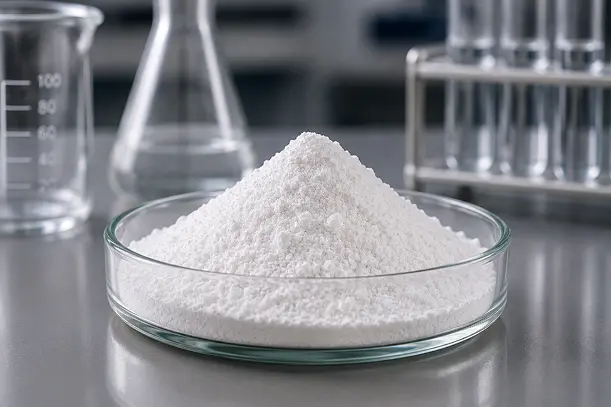
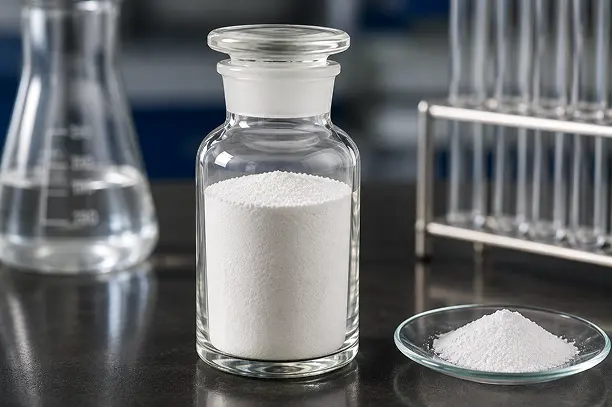
Not every important chemical compound is famous on its own, some are important because of what they help create. Dibutyl Tin Oxide, commonly known as DBTO, is a great example of this. On its own, DBTO is a relatively simple white powder.
But behind the scenes, it plays a foundational role in producing some of the most widely used organotin catalysts and stabilizers in the chemical industry, including compounds used in PVC stabilization, esterification catalysis, and silicone chemistry.
Think of DBTO as a “starting material” or building block, much like flour is to bread. On its own, flour isn’t bread, but without it, bread simply cannot exist. Similarly, DBTO itself may not always be the final active ingredient in a formulation, but it is often the essential raw material from which other important organotin compounds are derived.
This article breaks down, in a simple and structured way, exactly what DBTO is, covering how it’s named and identified, how it’s structured at the molecular level, how it’s manufactured, and the key physical, chemical, and analytical properties that define this compound.
To explore the range of tin compounds SV Plastochem supplies, including dibutyl tin oxide and related organotin intermediates, visit our Tin Compounds section.
Chemical compounds are often known by several different names depending on the context such as scientific literature, regulatory filings, or commercial trade, so it helps to understand DBTO’s full identity profile:
It’s worth noting that DBTO is sometimes confused with similarly named organotin compounds. For example, Bis(tributyltin) oxide (TBTO), is a completely different compound with three butyl groups per tin atom instead of two, and it carries a distinct regulatory and toxicological profile.
Anyone sourcing or referencing DBTO should always confirm the CAS number and EC number directly against the certificate of analysis or safety data sheet, rather than relying on the name alone, since naming conventions can vary slightly between suppliers and regions.
At first glance, DBTO’s formula — (C₄H₉)₂SnO — looks like a simple three-part molecule: two butyl chains, one tin atom, and one oxygen atom. In reality, the structural chemistry is more intricate.
Rather than existing as individual, isolated molecules, solid DBTO typically forms oligomeric or polymeric networks, where tin and oxygen atoms link together in repeating –Sn–O–Sn–O– chains or ladder-like structures, with the two butyl groups on each tin atom projecting outward from this backbone.
In some structural studies, DBTO has also been described as adopting **cyclic or cage-like arrangements**, depending on preparation method and hydration state.
A Few Structural Points Are Worth Highlighting:
This polymeric, extended structure is the main reason DBTO behaves as a solid with low solubility, unlike smaller organotin molecules that exist as discrete, freely dissolving units.
Understanding where DBTO comes from helps explain its purity considerations and typical industrial specifications. While exact processes vary by manufacturer, DBTO is generally produced through the following general pathway:
Because DBTO is often used as a precursor rather than a final product, manufacturers typically specify purity levels, residual chloride content, and particle size distribution, since these factors directly affect how efficiently DBTO can be converted into downstream catalysts like dibutyltin dilaurate.
DBTO’s practical value comes down to how it behaves chemically once introduced into a reaction system. Its reactivity centers around the tin-oxygen bond, which is readily attacked by various acidic or nucleophilic reagents:
1) Reaction With Carboxylic Acids: DBTO reacts with fatty acids to open its polymeric structure and form dialkyltin dicarboxylate esters, a transformation central to producing catalysts used in curing and esterification reactions
2) Reaction With Alcohols: Under suitable conditions, DBTO can react with alcohols to form tin-alkoxide intermediates, which serve as reactive species in further synthesis steps
3) Reaction With Mineral Acids: Strong acids can break down the tin-oxygen network entirely, releasing simpler tin salts
4) Resistance To Simple Hydrolysis: Despite containing an oxygen bridge, DBTO itself is relatively resistant to further reaction with plain water, which is part of why it remains chemically stable during normal storage
This reactivity profile explains why DBTO functions best as an intermediate, its tin-oxygen bond is reactive enough to be transformed into more application-specific compounds, yet stable enough to be manufactured, stored, and transported reliably.
Because DBTO’s structure can vary slightly depending on hydration and preparation conditions, industrial and research laboratories rely on several standard analytical techniques to confirm its identity and purity:
These analytical methods are especially important in research and quality assurance settings, where confirming the exact structural form of DBTO ensures consistent performance when it is later converted into downstream catalysts or stabilizers.
DBTO is not sold as a single, uniform product across the industry. Depending on the intended downstream application, suppliers typically offer it in a few distinct forms:
Choosing the appropriate grade depends heavily on the intended downstream process. For example, manufacturers converting DBTO into ester-based catalysts often prioritize particle size and purity to ensure efficient, complete conversion, while other applications may place more emphasis on cost-effective bulk supply.
Reviewing a supplier’s technical data sheet, rather than assuming all “DBTO” products are identical, helps ensure the correct grade is selected for a given process.
Looking for a reliable source of high-quality Di Butyl Tin Oxide for Preparation of Esters, Polyesters, Alkyd Resins and Esters of Methacrylates? Explore SV Plastochem’s Di Butyl Tin Oxide and connect with our team for technical support and pricing.
Dibutyl Tin Oxide, or DBTO, may not be a widely recognized name outside specialized chemical circles, but understanding its identity goes far beyond a simple formula. With the molecular formula (C₄H₉)₂SnO, CAS number 818-08-6, and EC number 212-449-1, DBTO is precisely defined within global chemical registries.
Structurally, it exists not as a simple standalone molecule but as an extended polymeric network of tin and oxygen atoms, manufactured through controlled hydrolysis of dibutyltin halides and confirmed through techniques like IR and tin-119 NMR spectroscopy.
Together, these structural, manufacturing, and analytical details paint a fuller picture of why DBTO holds such a foundational place in organotin chemistry, not as a flashy end-product, but as a precisely defined, well-characterized building block for a wide range of downstream industrial compounds.
DBTO is primarily used as a chemical intermediate for producing organotin catalysts and PVC stabilizers. It serves as a key raw material in the manufacture of compounds used in esterification, silicone chemistry, and polymer processing. Because of its stable and well-defined structure, it is widely used in industrial chemical synthesis. Its versatility makes it an important building block across several manufacturing sectors.
The CAS number of Dibutyl Tin Oxide (DBTO) is 818-08-6, while its EC (EINECS) number is 212-449-1. These identification numbers help distinguish DBTO from other organotin compounds with similar names. Referring to the CAS number is the most reliable way to confirm the correct chemical during sourcing and regulatory documentation. Manufacturers and laboratories routinely use these identifiers to ensure product accuracy and traceability.
DBTO is considered an important industrial intermediate because it can be readily converted into a wide range of valuable organotin compounds. Its balanced combination of chemical stability and controlled reactivity makes it ideal for downstream synthesis. Industries rely on DBTO to produce catalysts and stabilizers that improve the performance of plastics, coatings, and other specialty chemicals. This makes it a foundational material in modern organotin chemistry.